When people ask why a farm and a guesthouse in Rahatgarh is called a sanctuary, I tell them about the bird on our gate.
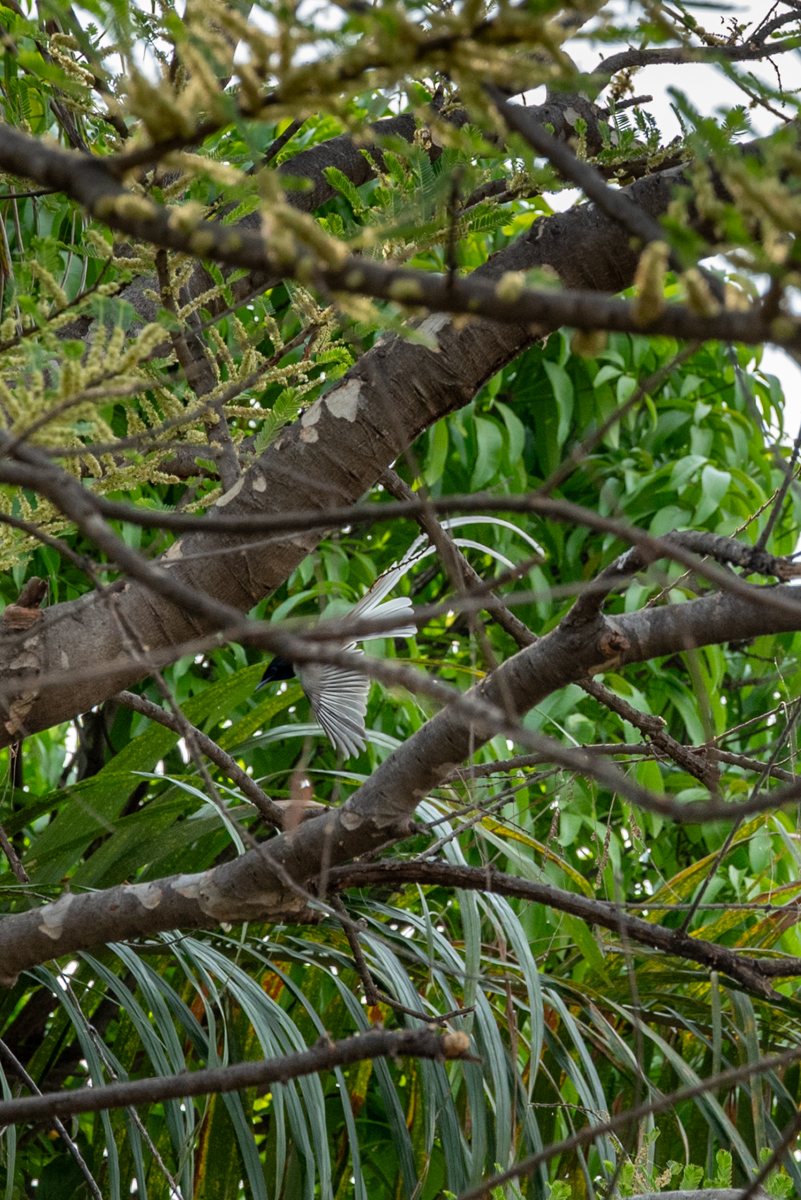
The Indian Paradise Flycatcher is the state bird of Madhya Pradesh. The male is a small white streak with a long ribbon of a tail, and it is famously shy. Most years it comes to our land for two or three days, somewhere in the turn of a season, and then it is gone before you can be sure you saw it.
The first time I managed to photograph it, I had been sitting near the well for the better part of a morning, telling myself I would give it ten more minutes. It arrived without any ceremony, did its work in the low branches, and left. I sat there for a while afterwards, quite happy, having done nothing all morning but wait.
We could have named the place for something more reliable. But I liked that the bird decides when to come. It does not perform. It lands if the land is quiet and safe and full of the small insects it eats, and it leaves when it wants to. A sanctuary, to me, is simply a place that is worth landing on.
So we try to keep the farm that kind of place, for the bird and for the people who come to slow down for a few days. If you visit in the right week, you might see it. If you do not, you will still have spent your days somewhere the flycatcher thought was worth a stop.
Kumar Dimitra
On the table
We don't decide the menu
Guests sometimes ask for the menu before they arrive, and I never quite know how to answer.
On a working farm the food is decided long before you sit down, and not by us. In summer the trees are heavy with mango. In the weeks after the rains the custard apples soften on the branch. In winter there are greens, roots, fresh wheat for the chapatis, and the physalis the children pick straight off the plant.
We cook what is ready. If you come in April you will eat differently than someone who comes in November, and that is the whole point. A vegetable that travelled three days in a truck to reach a city plate is picked here in the morning and cooked by evening. You can taste the difference, and once you have, a fixed menu starts to feel a little sad.
So when you pre-book your meals, we do not send a card of dishes. We tell you what the farm is giving that week, and we cook it the way we cook for our own family. Some of it you can gather yourself, walking into the field with a basket. The rest simply appears, hot, when you are hungry.
Eat what is there. It is one of the oldest ideas we have, and on a farm it still makes the most sense.
Kumar Dimitra
On the land
A farm that runs on the sun
For most of my childhood, electricity in this part of Madhya Pradesh was a thing that came and went as it pleased. You planned your evenings around it.
Today the farm runs entirely on the sun. Twelve kilowatts of panels on the roof, a bank of batteries, and power that simply does not stop. Guests are often surprised that a farmstay this rural has fast internet and cool rooms straight through a power cut in the town beyond our gate.
But the solar is not really about comfort. It is about what a reliable, clean source of power lets a rural place become. A guest can take a video call from a shady corner and ship a week of work. A family can bring an elderly parent and know the fan will run all night. A team can hold a retreat here and know the footprint is genuinely small, because the power came off our own roof.
We started The Raahat Sanctuary, and Maadhyam Organics before it, to build something in the village rather than leave it behind. Power from our own roof, food from our own soil, and work that stays here. That is the quiet version of the thing everyone means when they say the word sustainable.
The sun does the rest.
Kumar Dimitra
The farm
Everyone here just calls it Farmstay
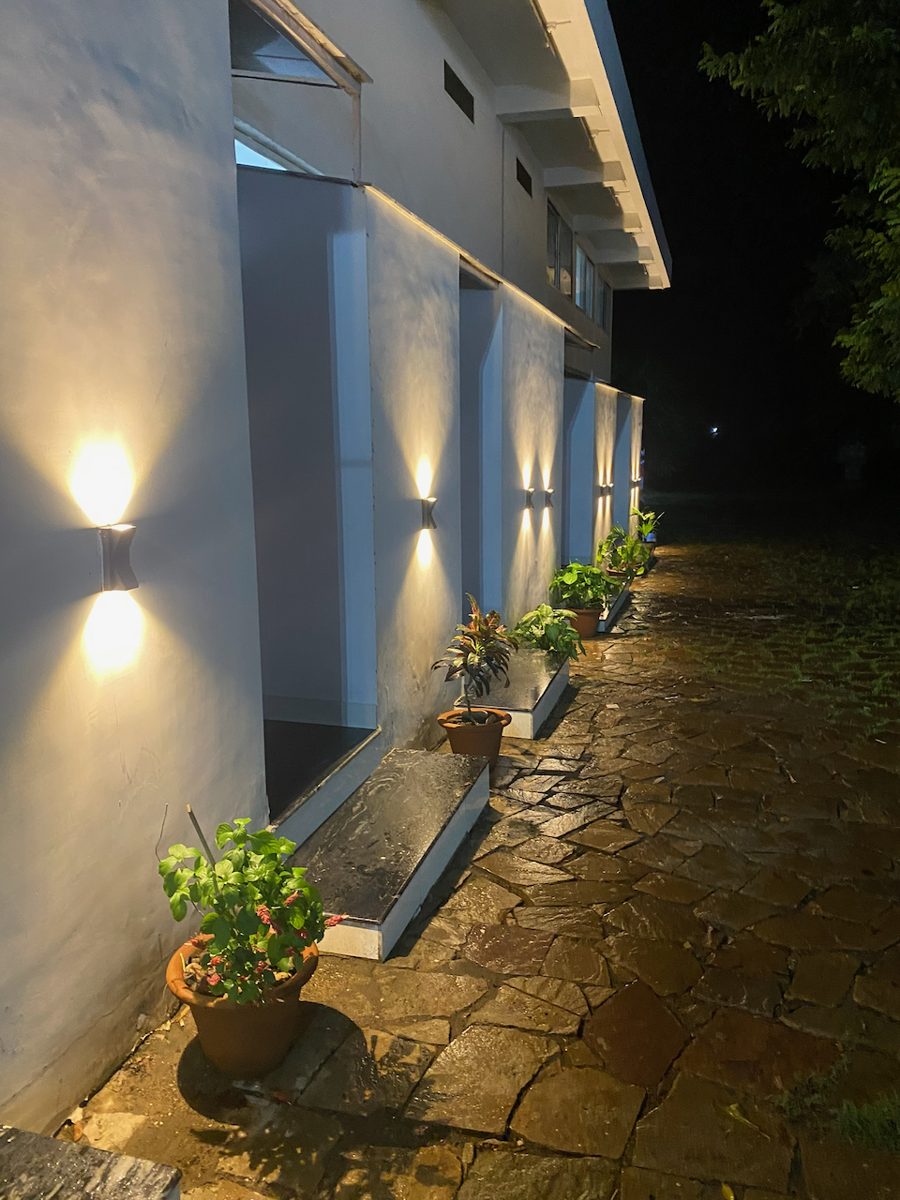
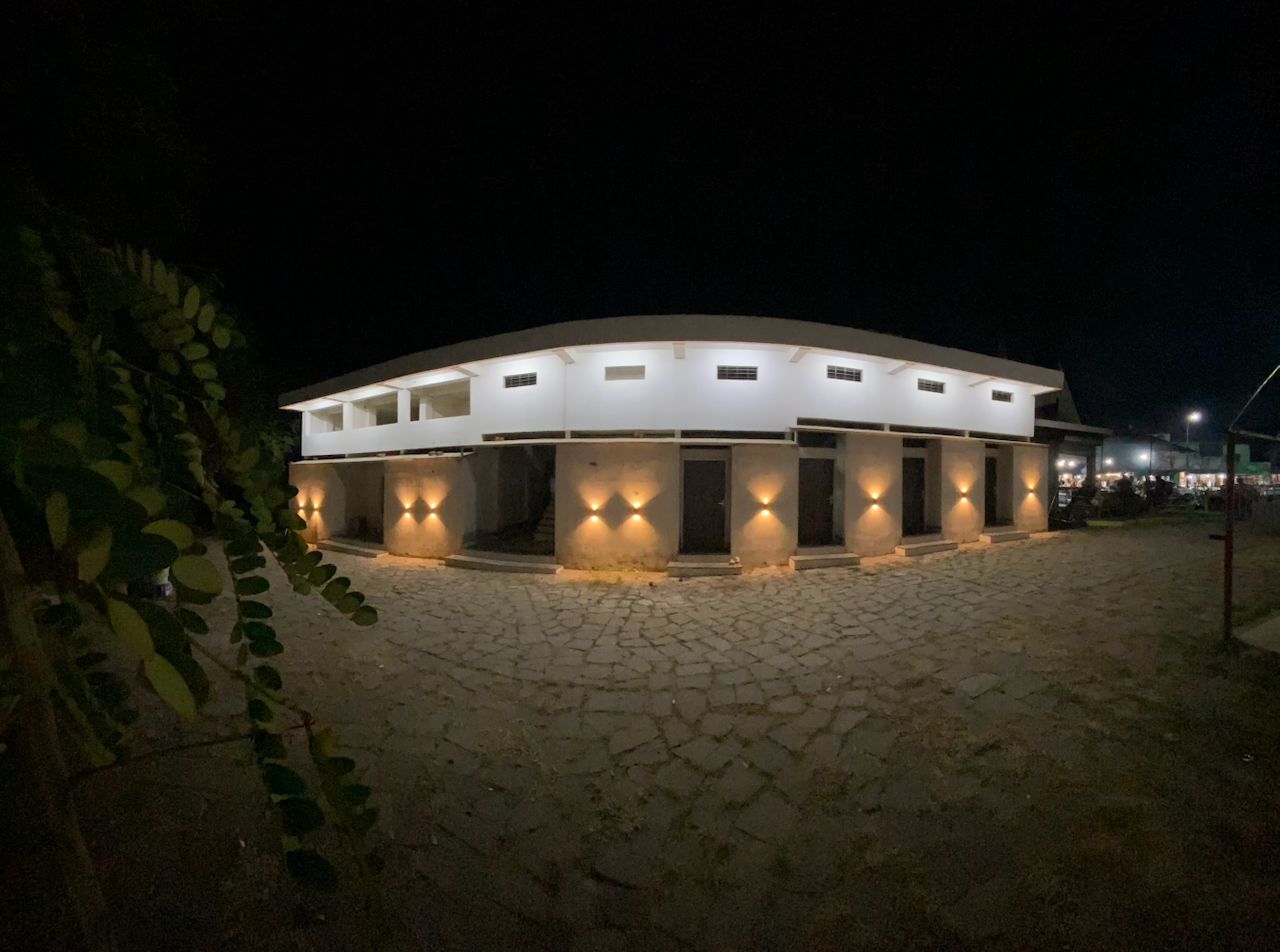
The rooms at lamp-lighting time.
I was raised in this village. Then I went and saw a good deal of the world, and every time, without quite deciding to, I came back. Somewhere in those years I understood that I was not going to leave my roots, and that what I really wanted was to share what I felt here with people who had never had a reason to come.
So, first, the honest part. We are on the highway. The Bhopal road runs past the gate and you will hear a horn now and then, especially in the evening when the trucks are moving. I am not going to pretend otherwise.
But walk in through the gate, or drive in, and something changes. There is a courtyard with a tree in it. There is a canal at the back with the whole sky in it at dusk. There are cows on the lawn who will look up at you and then go back to their grass. And there is a kitchen that has been cooking the same food since I was small enough to be underfoot in it.
I hope that food gives you the comfort it gave me. I hope you eat the best daal baati of your life, and I am prepared to promise that one. I hope your children find a good stick in the field and chase a butterfly with it, and come back with their knees green. I hope your parents sit in the courtyard and tell you stories of the farms they grew up on, the ones you have never heard because nobody asked. I hope you make friends with the cows, the squirrels, the frogs and the crickets, and with Bruno, our resident soldier, who will make the introduction himself whether you want it or not.
And I hope, most of all, that you go home knowing that a place not so far away, and not so hard to reach, can still give you some raahat.
That is the whole idea. The town calls it Farmstay, because that is what is painted on the board at the gate. I named it The Raahat Sanctuary, and the sanctuary part is a promise I try to keep.
The farm
A house built around its courtyard
The courtyard side of the guest wing.
When we built the rooms, we did not want a hotel corridor. We laid the place out the way big houses in the village used to be laid out: rooms just large enough for what they are for, opening onto a wide green courtyard, which is where everyone ends up anyway.
That was the whole plan. We never wanted anybody stuck in a room with the curtains drawn. We wanted people outside. Sit in the sun with a cup of tea until you have had enough of it. Let the rain come down on you once, because it is warm rain here and you will not regret it. Take the chair next to somebody you have not met and find out where they are from. Watch the light change on the wall.
And then, when you are tired, go in and sleep properly. The rooms are cool, quiet and simple, and the beds are good. Every room has air conditioning, hot water around the clock, fast internet and a television, none of which you will use as much as you think.
You can sleep guilt free, too. Every unit of electricity on this farm is made on this farm, from the panels on our roof. We generate more than we use. There is no generator to switch on at nine, no diesel, and nothing that hums through the night. When the lamps go off, it is dark and it is silent, and that is the point.
The lamps come on around seven. If you want to know when the courtyard is at its best, it is then: the walls warm, the flagstones still holding the day's heat, and somebody already dragging a chair out to sit in it.
On the table
The best daal baati of your life
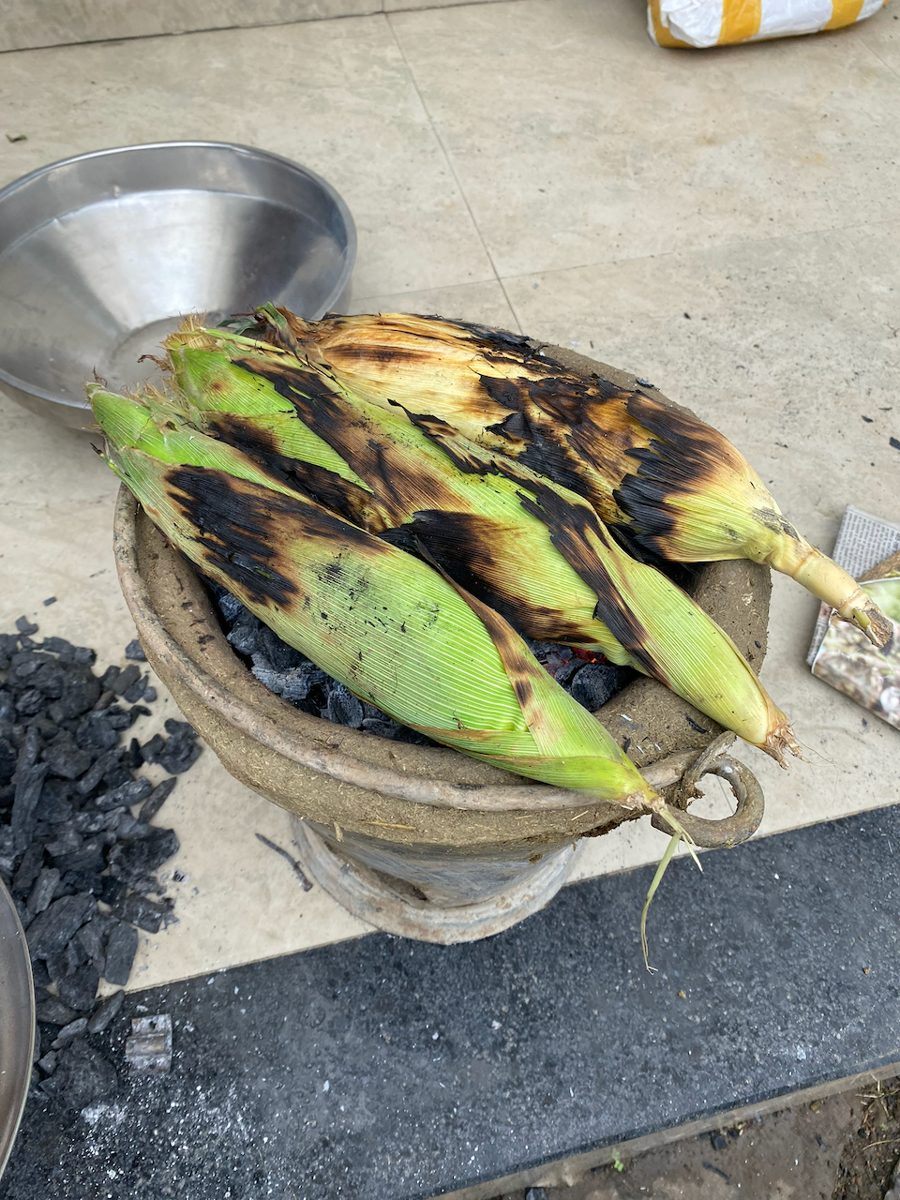
Corn on the sigri, in the rains.
I will start with the promise, because it is the only one I make in writing: you will eat the best daal baati of your life here. The baati comes off the coals, the daal has been on since morning, and there is ghee on both.
Now the rest of the plate, honestly.
A lot of what you eat came off the farm that morning, and what that is depends entirely on the season. In winter it is the fresh wheat, milled at our own chakki, the greens, the chana roasted on the fire, guava off the tree. In the rains it is corn on the sigri, karonda from the bushes, dragon fruit off the posts. In the hot months it is mango, cold sherbet and cucumber all afternoon.
What does not come from the farm comes from people we know. The singhara is from the lake at Sagar, and so is the sev, and I would not swap either of them for something grown here. I would rather tell you where a thing came from than tell you a story.
If you are up early enough, come and pick with us. Walk into the orchard with a basket, take what is ripe, and then eat it at lunch. Children are particularly good at this and particularly bad at leaving the physalis alone.
Everything is cooked the way it has always been cooked in this house, with your health in mind before anything else. Nothing from a packet. Nothing hurried. No menu, because the season writes it, and we would rather cook what is ready than what is printed. Tell us you are coming, and lunch is hot when you walk in.
And second helpings, without asking. That is not a promise so much as a habit.
The farm
Two days a year, like clockwork
In flight, the same morning. Two years of trying, and twenty seconds of luck.
For two or three days every year, like clockwork, a bird with long white ribbons for a tail would arrive on the farm, work its way through the low branches, and leave.
For two years I could not get a photograph of it. It is quick, and shy, and it never once sat where I was looking. I would give it ten more minutes, and then ten more, and it would be gone. When I finally did catch it, one March morning, I looked it up and found out what had been visiting: the Indian paradise flycatcher, the state bird of Madhya Pradesh, and one of the rarest things that will ever land in a garden.
I was completely taken. I still am. And it changed what I thought this land was for.
Since then it has been a personal goal to make the farm a sanctuary for every creature we share it with, the ones with ribbons for tails and the ones without. That has meant leaving the old trees alone, keeping the water at the back clean, not spraying, and letting the hedges be untidy enough for nests. It turns out that the things a rare bird needs in order to land are the same things a person needs in order to rest.
That is where the name came from. A sanctuary is a place it is safe to land. And that is why the place exists as a business at all: I wanted somewhere people could see all of this up close, the flycatcher if they are lucky, and the kingfishers, rollers, sunbirds, herons and hornbills if they are not.
The photograph is from the end of a March. Two days, and gone. If you are here in the right week, sit near the well and give it ten more minutes.
Nearby
Days out, and we plan them with you
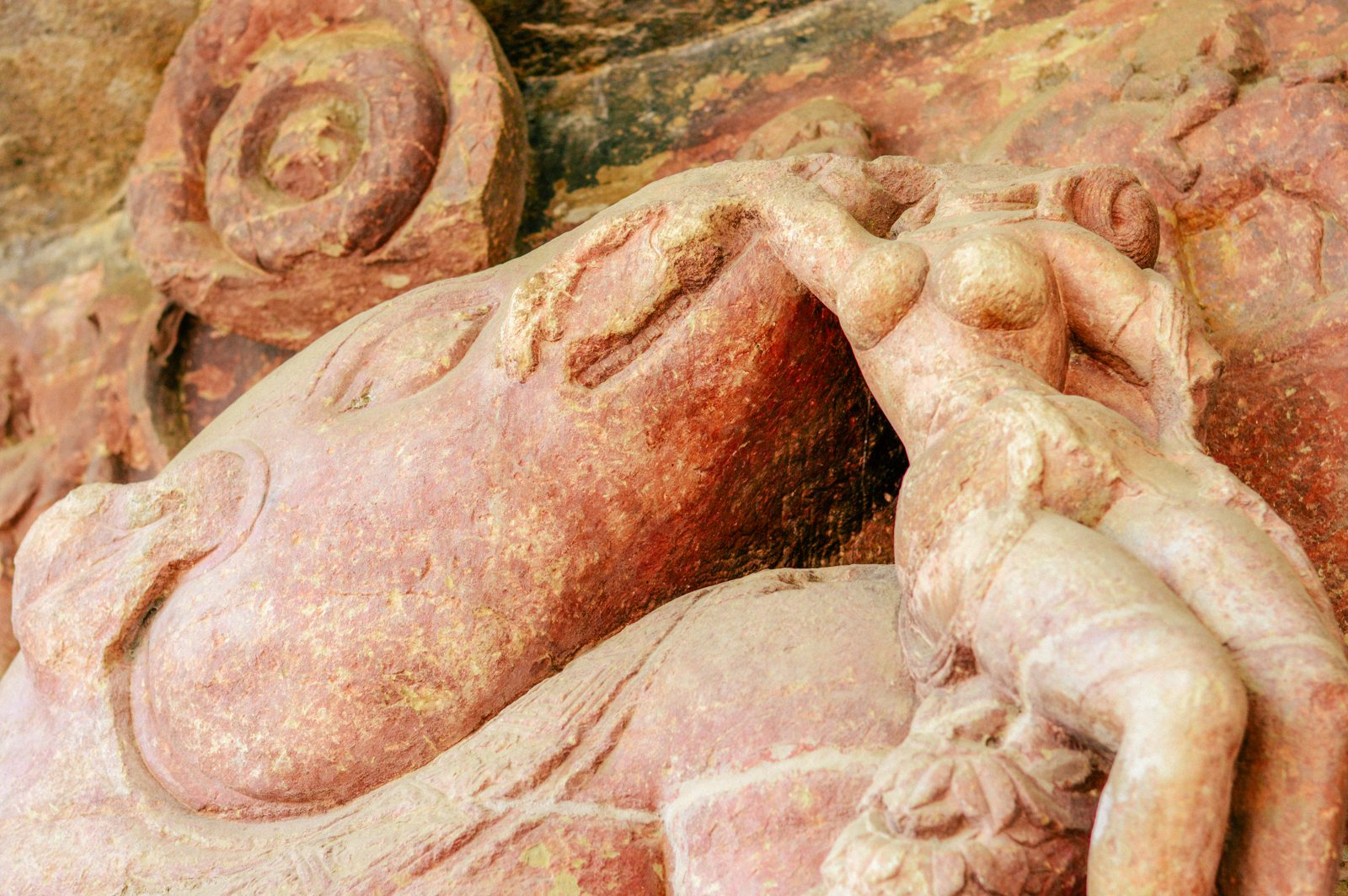
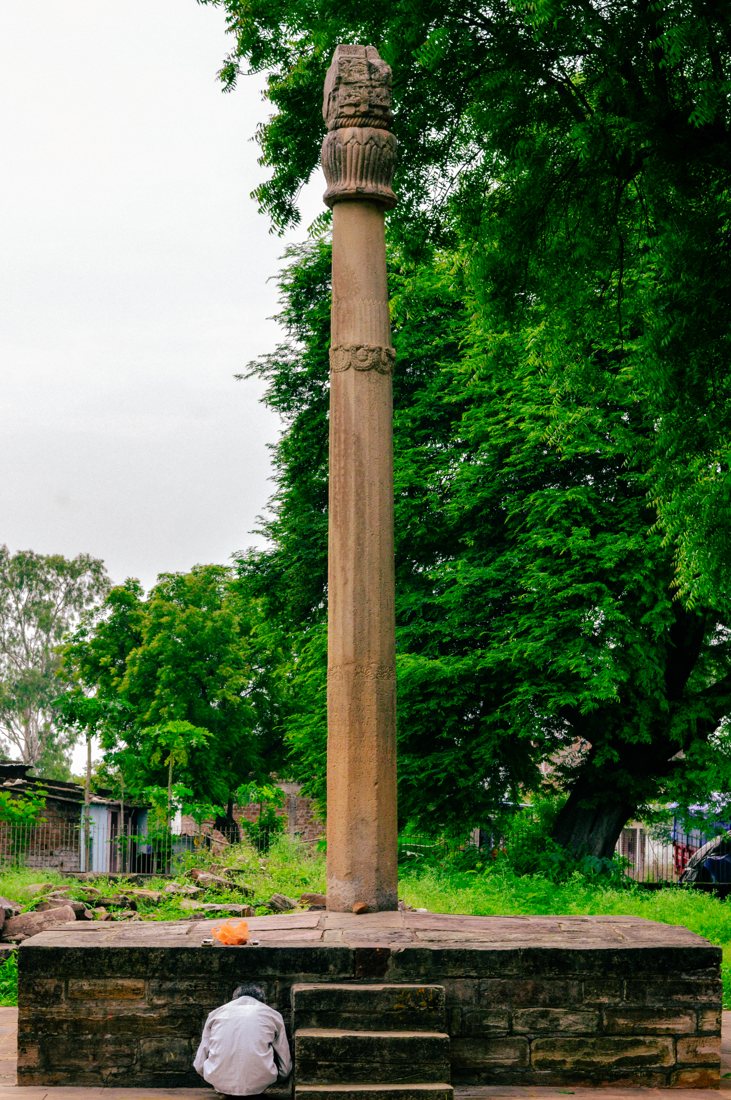
Udaigiri: the reclining Vishnu, cut into the pink rock fifteen hundred years ago.The Heliodorus pillar at Vidisha, standing in its field.
As much as we would love you never to leave the farm, some of the best days here start with a drive out of the gate. We will plan them with you, pack the food, and tell you where the good chai is on the way.
Sanchi is seventy seven kilometres away, about an hour and a half by car. The Great Stupa is two thousand years old and its four carved gateways are the reason people come from the other side of the world. There is the bodhi tree, the museum, and a hill with enough shade to sit under for an afternoon. Give it a morning and an afternoon, and we will pack a picnic so you can eat under the trees. If there is light left, the Heliodorus pillar is on the way back: a stone column raised by a Greek ambassador more than two thousand years ago, standing in a field with almost nothing around it.
Udaigiri, on the edge of Vidisha, is another day and a different world. It is a hill full of caves cut in the Gupta period, fifteen hundred years ago: the great Varaha, the boar form of Vishnu, lifting the earth out of the water, larger than life; one of the earliest carved images of Ganesha anywhere; and a Jain cave shrine from the fifth century. Take a torch, go slowly, and climb to the top for the view over the fields.
Sagar is thirty five kilometres, and we can shape it to whoever you are. A boat on Lakha Banjara lake in the morning. A walk through the old market. The university, which a man named Hari Singh Gour built by giving away everything he had. And as much street food as you can manage, ending, always, with an ice cream.
For getting here and moving on: Sagar railway station is thirty five kilometres from the farm, and Bhopal, with the airport and the main junction, is about a hundred and forty kilometres, two and a half hours by road. Tell us your dates and how you are travelling, and we will work out the days around it.
The fort and the waterfall, three and four kilometres from the gate in two different directions, are a different kind of day: a walk rather than a drive, and we will point you down the right road.
On the land
The water at the back
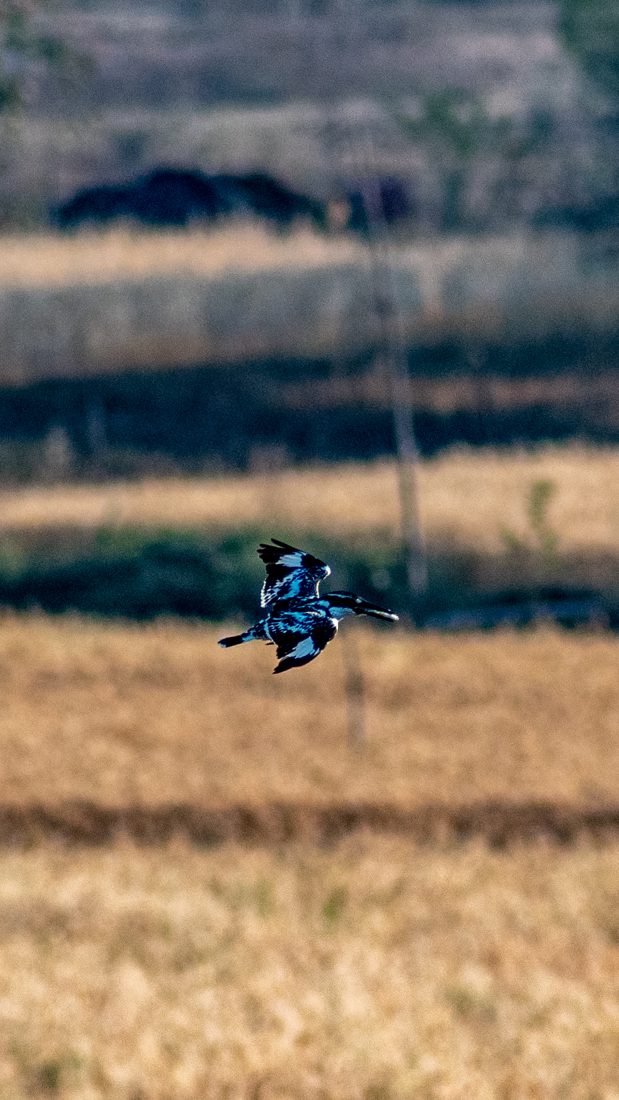
A pied kingfisher, waiting.
The farm was lucky in where it was put. Along the back of the land runs a tributary of the Bina river, and that water is the reason there is so much life here.
The trees do their part. Old mango, tamarind, siris and the palms give shelter to more birds and animals than I have managed to list. Whatever the trees cannot do, the canal does. It carries water for most of the year, and everything that needs water comes to it.
Go and sit there in the evening. Take the path from the rooms, five minutes, and find the bank.
You will see a kingfisher, pied or the small blue one, drop like a stone and come up with a fish. You will watch a heron stand more still than you have ever managed, for longer than you can bear to watch, and then eat. Egrets come in over the fields in the last light. A mongoose may cross the path in front of you and not care. There is a pair of monitor lizards who live along the bank and will pretend you are not there, and now and then a water snake, harmless, and far more frightened of you than you of it.
Then the light goes. The water stops moving, goes flat, and holds the whole sky in it, gold and then pink and then grey. And the fireflies come out over it.
It is five minutes from your room. Most people go once, on the first evening, and then find they are going twice a day.